
"new buyers"
2000 article(s) found

Transfer at a low price! Starbucks changes ownership and reopens!
According to local media reports, AntonPinsky, the founder of Pinskiy&Co, a famous local catering company, will sign a contract at the end of this month to acquire the lease rights of all Starbucks stores in its territory, the berth in Pushkino Park Shopping Center, and open a new local chain of coffee products.

Introduction of boutique coffee with bright fruit flavor in Kenyan coffee manor
The coast of China Coffee Network is plain, and most of the rest are plateaus with an average elevation of 1500 meters. The East African Rift Valley, Mount Kenya, the highest peak in Kenya, the eastern branch of Mount Kenya cuts across the north and south of the plateau, dividing the highland into east and west. The bottom of the Great Rift Valley is 450 mi 1000 meters below the plateau, 50 mi 100 km wide, with lakes of different depths and many standing.

Kenya AA Coffee Bean
Flavor Taste Characteristics: Rich aroma, balanced acidity. Coffee is a part of African life, whether in the most remote parts of the Great Rift Valley, or in the Maasai nomadic Masai Mara steppe, whether urban or rural, can always smell the aroma of coffee, and look for incense to go, stay, taste, with a cup of coffee to carve those endless African time. Kenya is located in Ethiopia.
Yunnan Coffee wants to compete for pricing Power
From 390000 mu five years ago to 1.3 million mu in 2012, the rapidly expanding Yunnan coffee industry suffered a cold spell in the market last year.

Rwanda Coffee Flavor
Rwandans have been growing coffee since colonial times, but until 1999, its products were still classified as below Class C and were not popular in the global market. The reason for the poor quality is that farmers do not have a fixed procedure for washing coffee beans and do not process coffee fruits according to specifications in time. Buyers buy coffee beans at $0.33 per kilogram, and farmers keep warm by the meagre profits earned at low prices.

Flavor and taste of New Coffee beans in the Blue Mountains of Jamaica the characteristics of the manor area introduce the origin of Jamaican coffee
But by 1948, the quality of coffee had declined and Canadian buyers refused to renew their contracts, so the Jamaican government set up the Coffee Industry Committee to save the fate of top coffee. By 1969, the situation had improved because the use of Japanese loans improved the quality of production, thus ensuring the market
After the drought in Yunnan affected the production of 30,000 mu of coffee for many years, the price went down again.
The continuous drought in Yunnan Province has had a great impact on the important local coffee industry. Data released by the Yunnan Coffee Association show that due to the impact of drought, about 30,000 mu of coffee in Baoshan and other places has been affected, which may lead to a 5% to 10% reduction in coffee production in the province, with an estimated economic loss of tens of millions of yuan. Simaomu, a subsidiary of Starbucks Aichi Coffee (Yunnan) Co., Ltd. (hereinafter referred to as Aichi Coffee).

Winner of the Mulana Cup Test Competition in Kenya-AA level Champion of Gondor processing Plant in Mulana District
The exchange of professional baristas please follow the coffee workshop (Wechat official account cafe_style) Today, Green Coffee is going to introduce a super powerful bean! Is the champion of Kenya Mulana Cup Test Competition-Gondor processing Plant from Kenya Mulana District, is the champion batch of AA level! Why, doesn't that sound very good? Come on, this is not some random vegetable market cup!
Brazilian production decline trading companies bet on Chinese coffee beans
According to the Wall Street Journal website on October 29th, commodities trading company EDF Man Holdings Ltd. Volcafe, a subsidiary, said on the 28th that it had signed an agreement with China Simao Arabica Star Coffee Co., Ltd. (Simao Arabicasm Coffee Company) to set up a joint venture to buy and sell coffee beans from Yunnan. According to the report, China

The story of new varieties of Honduran coffee beans what are the varieties and characteristics of Honduran boutique coffee?
In addition, each of the six coffee-growing regions in Honduras has at least two or three of the five major Arabica coffee varieties: bourbon Kaddura Itsuka du Pacas Lempira IHCAFE-90 Parainema (Sarchimor), a common Honduran coffee variety Instituto Hondureo del IHCAFE is designed to promote

Nicaraguan Coffee Manor Joy Manor introduces Matagalpa producing area
For Nicaragua, the overall coffee industry is depressed, which has a great impact on the country. In Nicaragua, the coffee industry provides 200000 of the country's jobs, and coffee beans are the country's most economically valuable crop, accounting for 20% of the country's total exports. The low price of coffee has hit all the countries that produce washed Arabica beans, but the pain seems to be even more magnified in Nepal.
Coffee bean production in China is about to increase
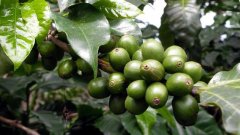
The price of Arabica coffee beans has risen 73 per cent so far this year amid a drought in Brazil, the world's largest grower of Arabica coffee beans, and concerns about production next year amid persistent dry weather. According to the report, China accounts for less than 1% of global coffee production, but the global limited supply of Arabica coffee and its production

You do not know the black gold game ─ sustainable coffee feature
Luo Yi is not a sericulturist who made a popular film on the Internet not long ago, but a foreign interview program in which the host brought marketed chocolate to Ivory Coast, Africa, which is rich in cocoa beans. Local farmers grow cocoa beans for generations to make a living, but they have never tasted or even heard of chocolate. Everyone shared the chocolate bars while picking from them.

The Historical Origin of Rwandan Coffee
Historical editors originate that Rwandans have been growing coffee since colonial times, but until 1999, its products were still classified as below Class C and were not popular in the global market. The reason for the poor quality is that farmers do not have a fixed procedure for washing coffee beans and do not process coffee fruits according to specifications in time. Buyers buy coffee beans at $0.33 per kilogram, which farmers earn at low prices.

Introduction to the characteristics of Flavor description and Grinding degree of Yisopiajajara Coffee in Kenya
Kenyan coffee is mostly grown at 15002100 meters above sea level and is harvested twice a year. To ensure that only ripe berries are picked, people must tour the forest about seven times. Kenyan coffee is grown by small farmers. After they harvest the coffee, they first send the fresh coffee beans to the cooperative cleaning station, where the washed and dried coffee is covered with parchment beans.

Vietnam fine coffee beans Vietnam cat shit coffee?
According to the statistics of Vietnam Coffee Association, in 2000-2001 (from October 2000 to September 2001), Vietnam exported 874676 tons of coffee from 149 enterprises, among which the three largest exporters were OLAM Company (foreign-owned enterprise, 21326 tons), DAKMAN Company (joint venture, 18076 tons) and Vinafimex Company (local enterprise, 13719 tons). Vietnamese coffee

Energy giant transformation "sell" coffee 9 months turnover exceeded 5 billion
Chongqing's state-owned enterprises have launched structural reforms on the supply side, and transformation and upgrading have given new vitality. Chongqing Coffee Trading Center held a promotion activity in Shanghai New International Expo Center. On the afternoon of April 12,14 central media gathered in Chongqing Coffee Trading Center. This city, which did not produce a single coffee bean, but started a coffee business with a turnover of several billion yuan, attracted their attention. June 2016, heavy

The Coffee War in Kenya
The quality of Kenyan caffeine is widely praised in the global market, known as "black gold" in the industry, but the industry has long been monopolized by Western multinationals. To this end, Kenya wants to attract Chinese and other Asian investors to the market, thus intensifying the business game.

Introduction of washed Rwanda coffee beans classification of fine coffee
Rwandans have been growing coffee since colonial times, but until 1999, its products were still classified as below Class C and were not popular in the global market. The reason for the poor quality is that farmers do not have a fixed procedure for washing coffee beans and do not process coffee fruits according to specifications in time. Buyers buy coffee beans at $0.33 per kilogram, and farmers keep warm by the meagre profits earned at low prices.
He returned to his hometown to grow and sell coffee beans with an annual revenue of more than 10 million yuan.
New farmers are different from the capable people in rural areas in the past, they love agriculture itself more, they study technology diligently, are good at interpersonal communication, are full of learning spirit, and pursue creative innovation. Although the number of this group is not large, but with the help of the mobile Internet and new media, they have formed. This group of people all share the same characteristics: they have experienced the baptism of new media and new business models; they realize that they should use